
Expertise & Metallography
/ expertise & metallography /
Metallographic Expertise
& Materials Failure Analysis
CRITT MATÉRIAUX INNOVATION performs the investigations necessary to determine the causes of failure of your metallic parts and industrial equipment: fatigue fracture, pitting or stress corrosion, abnormal wear, cracking, fretting-corrosion. Our COFRAC ISO 17025 and NADCAP accredited laboratories provide state-of-the-art analysis resources (SEM-EDS, optical microscope, binocular loupe, spectrometers) to identify the nature and origin of the defect, establish probable scenarios and support you in your corrective solutions.
State-of-the-art metallographic analysis resources
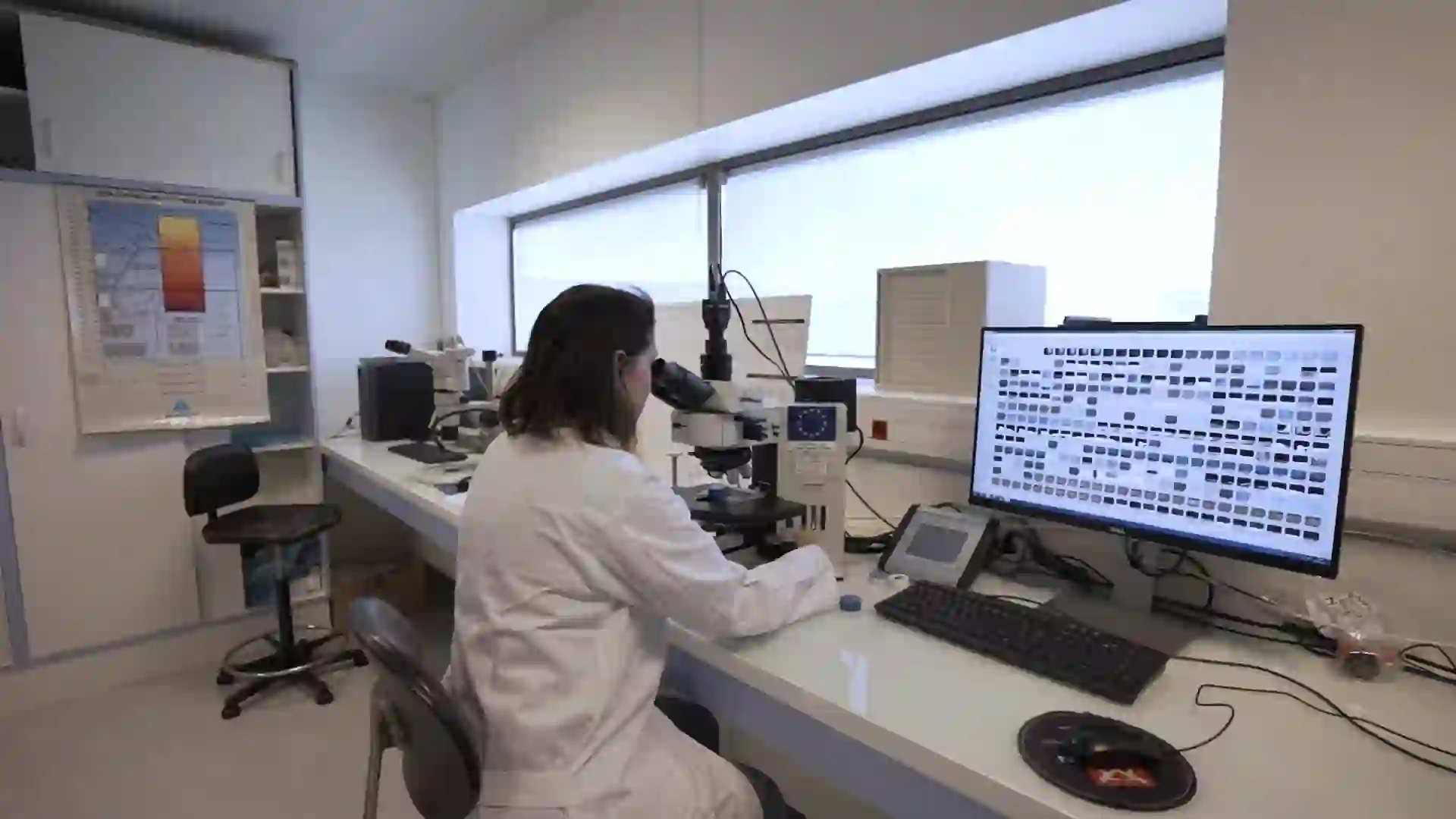
Our laboratories have high-performance equipment for failure analysis: Scanning Electron Microscope coupled with EDS spectroscopy (SEM-EDS), ICP or spark spectrometer for elemental chemical analyses, metallographic optical microscopes, high-resolution binocular loupe, mechanical test benches (tensile, Vickers/Brinell/Rockwell hardness), and metallographic sample preparation equipment.
- COFRAC ISO 17025 accreditation
- NADCAP accreditation (Aero/Defense)
- Certified expertise reports
Types of failures and damage analyzed
Our metallurgist experts work on all metallic material and alloy failure issues. Each metallographic investigation is conducted rigorously to identify the nature, origin of the defect and establish probable failure scenarios.
- Fracture & Cracking : fatigue fracture (propagation lines), static overload, brittle fracture, crack initiation, intergranular propagation
- Metallic corrosion : pitting corrosion, stress corrosion cracking (SCC), galvanic corrosion, intergranular corrosion, atmospheric corrosion, crevice corrosion
- Wear & Tribology : abrasive wear, adhesion, fretting (low amplitude movements), fretting-corrosion (oxidation related to fretting), spalling, seizure
- Material defects : chemical composition non-conformity, metallographic microstructure defect, incorrect heat treatment, presence of non-metallic inclusions
- Welding and assembly defects : cracking in Heat Affected Zone (HAZ), assembly defect, intergranular sensitization, weld porosities
Our metallographic expertise approach
Our metallographic expertise is based on rigorous methodology and advanced characterization equipment. Each failure analysis follows a structured protocol in 3 complementary steps to ensure an accurate and reliable diagnosis:
Macrographic examinations with binocular loupe
Observation of fracture surface in general and detailed view. Identification of fracture type (fatigue, ductile, brittle). Location of initiation and surface condition analysis.
Micrographic examinations with optical microscope
Metallographic preparation (mounting, polishing, chemical etching). Observation of microstructure, phases present, grain boundaries. Detection of inclusions, porosities, or structural anomalies.
SEM-EDS analyses and advanced characterizations
Scanning Electron Microscopy for high-resolution observation. EDS spectroscopy for local chemical mapping. Spark or ICP spectrometry for global elemental composition. Mechanical tests (macro or micro Vickers/Brinell hardness, tensile, impact bending if necessary).
Expertise examples performed
 Medical implant - Implanted device
Expertise of a femoral stem after fracture
Investigations : Binocular loupe: fracture surface with propagation lines characteristic of fatigue fracture. Initiation identified with surface condition degraded by fretting-corrosion (oxidation). Optical microscope: correct metallographic microstructure after etching, free of contamination.
 Agri-food industrial installation
Expertise of corroded stainless steel pipe
Investigations : Macro: numerous internal pitting corrosion. Micro on cross-section: corrosion cavities, good surface condition elsewhere, absence of inclusions. Healthy twinned austenitic structure. SEM-EDS: high chlorine concentration and sulfur traces localized in corrosion pits.
 Pressure equipment - Energy sector
Austenitic steel weld cracking
Investigations : Macro: crack located in Heat Affected Zone (HAZ). Micro: intergranular propagation. SEM: chromium carbide precipitation at grain boundaries (sensitization). Hardness tests: weakened zone in HAZ.
Your Questions, Our Answers
We analyze all types of failures on metallic materials: fatigue or overload fractures, corrosion (pitting, stress corrosion, intergranular, galvanic), wear and tribological phenomena (fretting, fretting-corrosion, abrasion, spalling), cracking, welding defects (HAZ, sensitization), microstructural defects, composition non-conformity. We work on all types of metals (steels, stainless steels, titanium alloys, aluminum...).
Our COFRAC accredited laboratories have: Scanning Electron Microscope coupled with EDS spectroscopy (SEM-EDS) for high-resolution observations and local chemical analyses, metallographic optical microscopes, binocular loupe, spark and ICP spectrometers for elemental compositions, mechanical test benches (Vickers/Brinell/Rockwell hardness, tensile), metallographic preparation equipment (mounting, polishing).
This strongly depends on the complexity of the problem, the necessary investigations and the workload of our experts. It is generally between 2 weeks and 2 months. When possible, we advise you to anticipate your request so that we can reserve time slots for you. Express turnaround times are possible depending on urgency and laboratory availability. Contact us at +33 3 24 37 89 89 to discuss your specific need.
Ideally yes, to allow a global observation of the failure context and precisely locate the initiation. However, we can work on representative samples or intervene directly at your site if the part is bulky or cannot be dismounted. Our experts will advise you on the best approach according to your configuration.
Yes, we work with great scientific rigor recognized by obtaining our numerous accreditations and qualifications (COFRAC, NADCAP, AIRBUS, SAFRAN, RENAULT). We are a completely independent laboratory, the integrity and accuracy of our expertise conclusions comes before any other consideration. Our employees are trained to resist any pressure, from whatever source, that would aim to present a biased version of our results. This establishes our credibility, particularly in case of litigation.
Yes, we work in all sectors: aeronautics and space (NADCAP Safran/Airbus qualification), automotive and equipment manufacturers, medical devices and implants, energy (nuclear, renewable), metallurgy and foundry, defense and armament, naval and offshore, railway, agricultural machinery and construction equipment, general industry. Over 40 years of multi-sector experience. Any industry using metallic materials in its processes or products is likely to use our services.