
Chemical Analysis
/ analyses & testing /
Chemical Analysis
& Materials Microanalysis
The chemical analysis and microanalysis laboratory of CRITT MATÉRIAUX INNOVATION offers comprehensive skills and equipment for elemental analysis, bulk or surface, on all types of materials or samples. Our analyses can be performed under COFRAC accreditation (NF EN ISO/IEC 17025), NADCAP or AIRBUS/SAFRAN qualification.
Available analysis techniques
Our laboratory has state-of-the-art equipment for complete chemical analysis of your materials and samples, with techniques covering elemental analysis, surface analysis, and structural characterization.
- Optical emission spectrometry (ICP-OES)
- Spark optical emission spectrometry
- Glow discharge spectroscopy (GD-OES)
- SEM-EDS (chemical mapping)
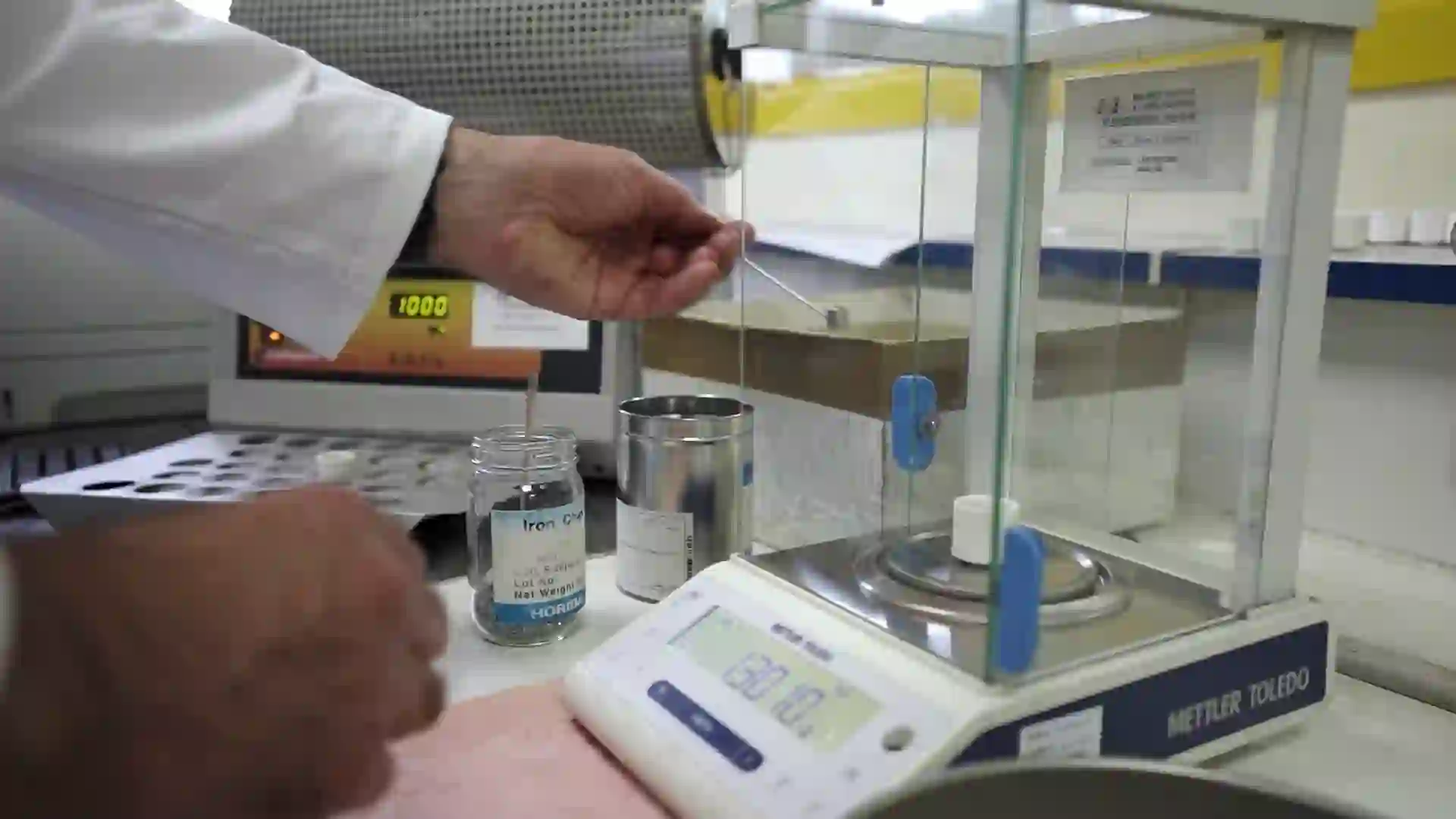
Analysis equipment and techniques
Our analytical capabilities cover all chemical analysis and microanalysis needs, from global elemental analysis to high-resolution localized chemical mapping.
- Optical emission spectrometry (ICP-OES) : multi-elemental analysis in solution, trace analysis, metallic and non-metallic materials after digestion
- Spark optical emission spectrometry : direct analysis on metallic parts, grade identification, composition control according to standards
- Glow discharge spectroscopy (GD-OES) : depth concentration profiles, coating and surface treatment analysis
- Infrared spectroscopy : identification of organic compounds, polymers, additives
- Gas analysis by reductive fusion : hydrogen, oxygen, nitrogen in metals
- Carbon/sulfur analysis by combustion : precise determination in steels and alloys
- Gas chromatography (GC) : separation and analysis of volatile compounds
- Total organic carbon analysis (TOC) : organic contamination control
- X-ray diffraction (XRD) : crystalline phase identification, structural analysis
- Scanning electron microscope SEM-EDS : local chemical mapping, microanalysis, high-resolution imaging
Our chemical analysis approach
Our chemical analyses are based on rigorous methodology and advanced characterization equipment. Each analysis follows a structured protocol in 3 complementary steps to ensure accurate and reliable results:
Sample reception and preparation
Sample reception and registration in our quality system. Definition of the appropriate analysis protocol (technique, method, standards). Sample preparation (depending on the technique used: sampling, grinding, dissolution, acid digestion according to matrix).
Multi-technique analyses
Chemical analyses performed according to appropriate techniques: ICP-OES, optical spectrometry, GD-OES, SEM-EDS, XRD, gas/carbon/sulfur analysis. Systematic quality control with certified standards and analytical blanks. All our instruments undergo rigorous maintenance and calibration. They are monitored by control charts that allow correction of any drift before it becomes critical.
Data processing and analysis report
Data processing and composition calculations. Comparison with applicable specifications and standards (ASTM, EN, ISO). Issue of analysis report with results, uncertainties, compliance. COFRAC accreditation if conditions are met.
Application examples
 Materials quality control
Elemental analysis and compliance verification
Analysis : Analysis of elements present in a sample or metallic part, and verification of compliance with a standard or specification. Our equipment allows analyses from a very small quantity of material.
Surface treatment analysis
Coating composition profile
Analysis : Determination of the chemical composition profile of a deposit as a function of thickness by glow discharge spectroscopy (GD-OES). Chemical element mapping on surface or bulk of a sample by EDS probe.
Aeronautics - Titanium alloys
Hydrogen analysis in titanium
Analysis : Hydrogen content analysis by reductive fusion. COFRAC and NADCAP accreditations for this service.
Your Questions, Our Answers
We offer 11 analysis techniques: ICP-OES, spark optical spectrometry, GD-OES, portable X-ray fluorescence (suitable for on-site controls), infrared spectroscopy, gas analysis (H₂, O₂, N₂) by reductive fusion, C/S analysis by combustion, gas chromatography, TOC, X-ray diffraction, and SEM-EDS for chemical mapping. Each technique is adapted to specific analysis needs.
We analyze most metallic materials as well as certain non-metallic materials used for implantable medical devices (notably hydroxyapatite). For materials we cannot analyze, we can call on other partner laboratories.
A large part of our chemical analyses can be performed under COFRAC accreditation (NF EN ISO/IEC 17025), NADCAP, AIRBUS or SAFRAN qualification. Consult our COFRAC accreditation scope for the detailed list of accredited tests. These accreditations guarantee international recognition of our results.
Yes, a large part of our chemical analyses can be performed under COFRAC accreditation (NF EN ISO/IEC 17025), NADCAP, AIRBUS or SAFRAN accreditation. Consult our COFRAC accreditation scope for the detailed list of accredited tests. These accreditations guarantee international recognition of our results.
Turnaround times vary depending on the technique and complexity of the analysis. For standard composition analysis (ICP-OES, spark), allow 3 to 5 working days. For more complex analyses (GD-OES profiles, XRD, SEM-EDS mapping), allow 1 to 2 weeks. Express turnaround times are possible depending on availability. Contact us for your specific need.
Yes, it's even one of our key expertise. We can notably determine the chemical composition profile as a function of thickness, from the surface to the substrate, using glow discharge spectroscopy (GD-OES). We can also characterize any deposit or treatment on micrographic cross-section, by observation or hardness filiation. Also see our pages on tribology and accelerated aging.